
Say Hello To The Bad Guy
What prison taught me about identity, accountability, and the stories we tell about each other.

Growing up, I knew what a criminal looked like.
The tabloids made sure of that.
Big, bold headlines. A face that looked like it was built for doing wrong. Eyes that never quite met the camera. The kind of person you could spot immediately because they looked different from the rest of us... didn’t they? They felt different. They belonged to a world most decent people would never touch.
That’s what I believed.
Not because anyone sat me down and taught me. Because I’d absorbed it long before I was old enough to question it.
The headline never just told you what someone had done.
It told you who they were.
Or so I thought.
Then life took a turn, and I found myself on the inside.
Everything I thought I knew about what a criminal looked like started falling apart... quietly... one cup of tea at a time.
Off With Their Heads
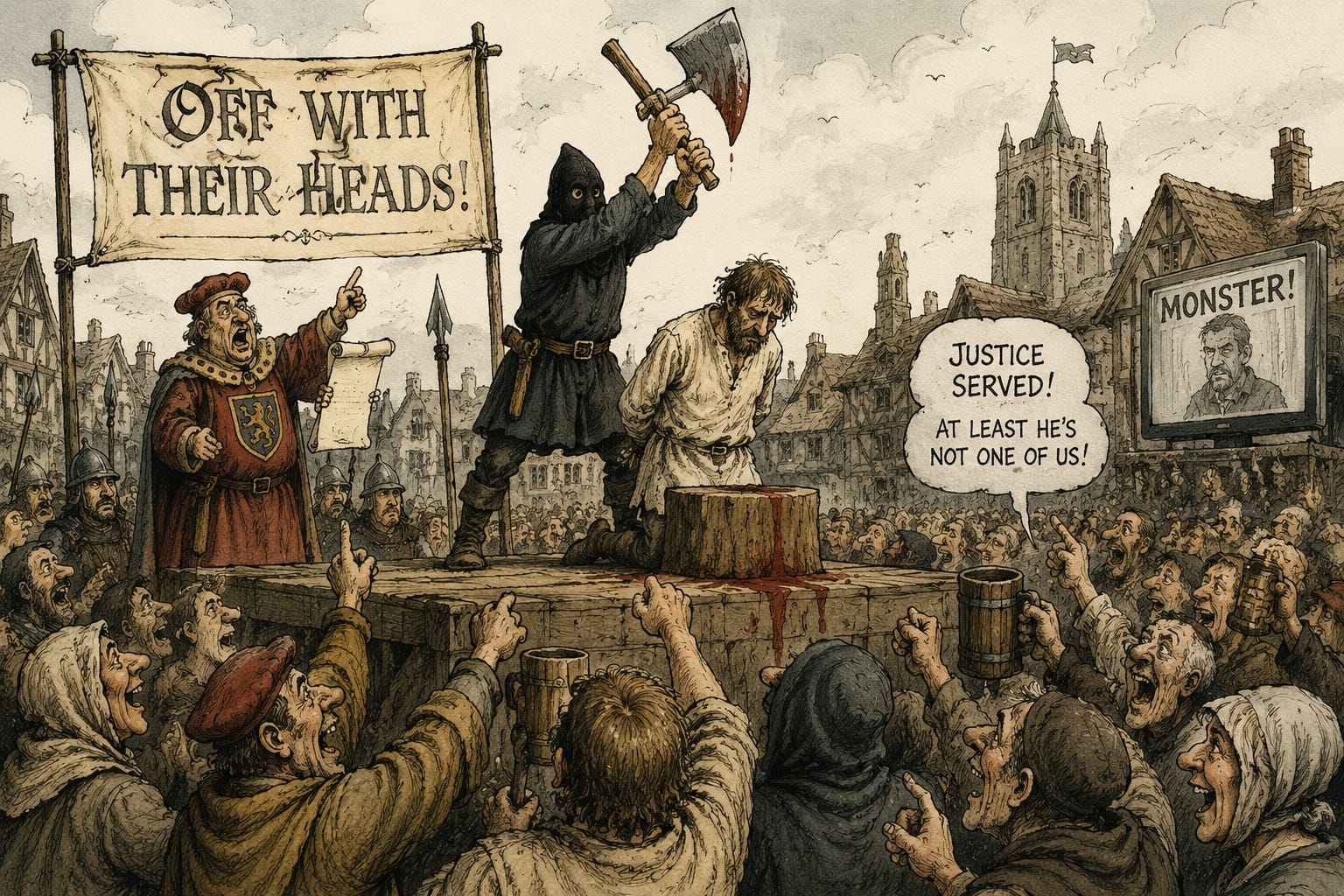
This isn’t new.
Long before newspapers, television or social media, crowds gathered in town squares to watch public executions with the same anticipation people now gather around a breaking news story or a viral scandal.
The mechanics were different.
The impulse was identical.
Someone had been declared the villain. The thief. The heretic. The transgressor. The one whose existence threatened the social order.
It didn’t always matter much what they’d actually done.
Steal a loaf of bread to feed a starving family. Be born into the wrong religion in the wrong place. Fall on the wrong side of a powerful person’s judgement.
Off with their heads.
The crowd roared. Justice had been served. Order had been restored. And everyone went home reassured that evil had a face... and thankfully, it wasn’t theirs.
Fast forward a few hundred years.
The town square has become a screen. The executions are digital. But the crowd still gathers with the same hunger. Comment sections. Talkback radio. Twenty-four-hour news. Algorithms that reward outrage because outrage keeps us watching.
Someone becomes the designated villain of the day. The monster. The predator. The criminal. The one who deserves everything that’s coming to them.
The technology changed.
The impulse didn’t.
We’ve become better at sharing outrage.
Not necessarily better at understanding people.
What changes — if we’re lucky, if we’re paying attention — is our willingness to ask the question the medieval crowd never did.
Who is this person, really? And what happened before they became the headline?
The Cup of Tea

A couple of weeks into my sentence in 2020, I got talking to a lifer.
I’ll let that word sit there for a moment. A lifer. The tabloid version of that word carries a particular weight. Maximum danger. Minimum humanity. Someone so fundamentally different from the rest of us that the only rational response is to lock them away forever.
He was somebody’s dad. Somebody’s grandad. He talked about football the way my mates back home always had… with the kind of tribal, cheerful, completely irrational passion that you either find hilarious or exhausting depending on the day. He was cheeky. He was warm. He laughed at himself.
In almost every way that mattered, he reminded me of people I’d known my entire life.
That was the first crack in the picture.
Years later, here in immigration detention, I met another man.
He was in his seventies. He’d been convicted of three murders. He’d spent forty years in prison.
Pause on that for a moment. Forty years of waking up behind locked doors. Forty years of routines decided by someone else. Forty years of birthdays missed. Forty years to sit with the worst decisions of your life.
When I met him, he reminded me of one of my uncles. Easy company. A dry sense of humour. The sort of man who makes a room feel comfortable without ever trying to be the centre of it.
His favourite moment each week wasn’t recreation. It wasn’t meal time. It wasn’t even the activities they put on like Bingo and board games.
It was a phone call from his grandson.
A little boy who would excitedly give his grandad the full match report from his weekend football game. Every pass. Every tackle. Every goal. Every refereeing… the whole picture from an excited young boy who loved his Pop.
His grandfather listened as though nothing else in the world existed.
Because, in that moment, nothing else did.
I grew up believing men like him were a different species. The headlines had taught me that. They taught me he was nothing like me. Nothing like the people I loved.
They were wrong.
Not about what he did.
About who he was.
That realisation didn’t erase his crimes. It simply made it impossible to pretend he wasn’t still human.
What I’ve Learned From the Inside
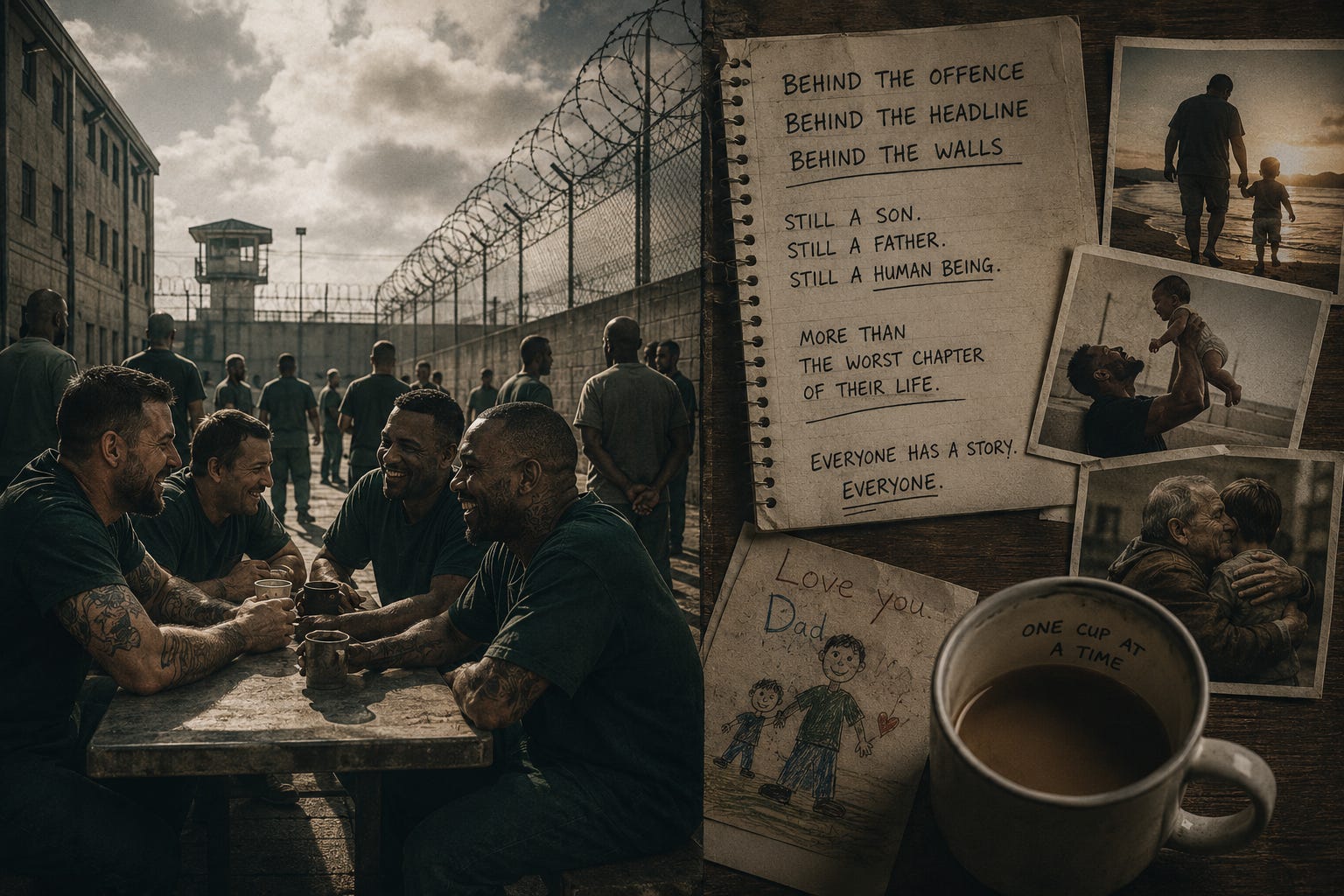
I’ve lived inside these systems. I know what it feels like to be reduced to a headline. I also know the gap between a headline and a human being is almost always wider than the story suggests.
Over the past few years, I’ve shared cells, exercise yards, classrooms and more cups of tea than I can count with thousands of men across prisons and immigration detention. Murderers. Drug importers. Armed robbers. Fraudsters. Men serving sentences longer than some people have been alive.
I’ve trained beside them. Laughed with them. Sat with them after phone calls from home. Watched them celebrate the birth of grandchildren they couldn’t hold. Watched them grieve parents they couldn’t bury.
And underneath the offences... underneath the headlines... underneath years, sometimes decades, of consequence... I found something that surprised me.
Not innocence.
Humanity.
They laughed like everyone else. Loved like everyone else. Worried about their families like everyone else. Missed home like everyone else. Felt shame. Felt hope. Felt regret.
That shouldn’t have been a revelation.
But it was.
Because I’d spent most of my life believing criminals were fundamentally different from the rest of us.
They weren’t.
Serious harm rarely emerges in a vacuum. Sometimes it’s greed. Sometimes it’s entitlement. Sometimes it’s addiction. Sometimes it’s untreated trauma. Sometimes it’s years of violence. Sometimes it’s simply a lifetime of terrible decisions. Usually... it’s all of those things tangled together.
Human beings are messy.
Which is precisely why headlines never tell the whole story.
None of that removes responsibility.
But it does provide context.
And context doesn’t erase accountability. It explains how accountability became necessary.
That’s the difference between understanding someone and excusing them.
They’re not the same thing.
On Consequences
Before we go any further, I want to be clear about something.
Nothing I’ve written is an argument against consequences.
And I understand… genuinely, not performatively… why punishment will never feel like enough for some people. If you’ve lost someone to violence, if a crime shattered your family, if someone took from you something that can never be returned, the idea that the person responsible is somewhere having cups of tea and writing essays may feel unbearable.
That anger is real. I don’t get to tell anyone how they should feel about it.
Vengeance is one of the oldest human impulses we have. When we have been profoundly harmed, the desire for it doesn’t make us cruel. It makes us human.
But once the sentence has been imposed, once the courtroom is empty, once the prison gate closes, a different question begins.
What do we want to happen next?
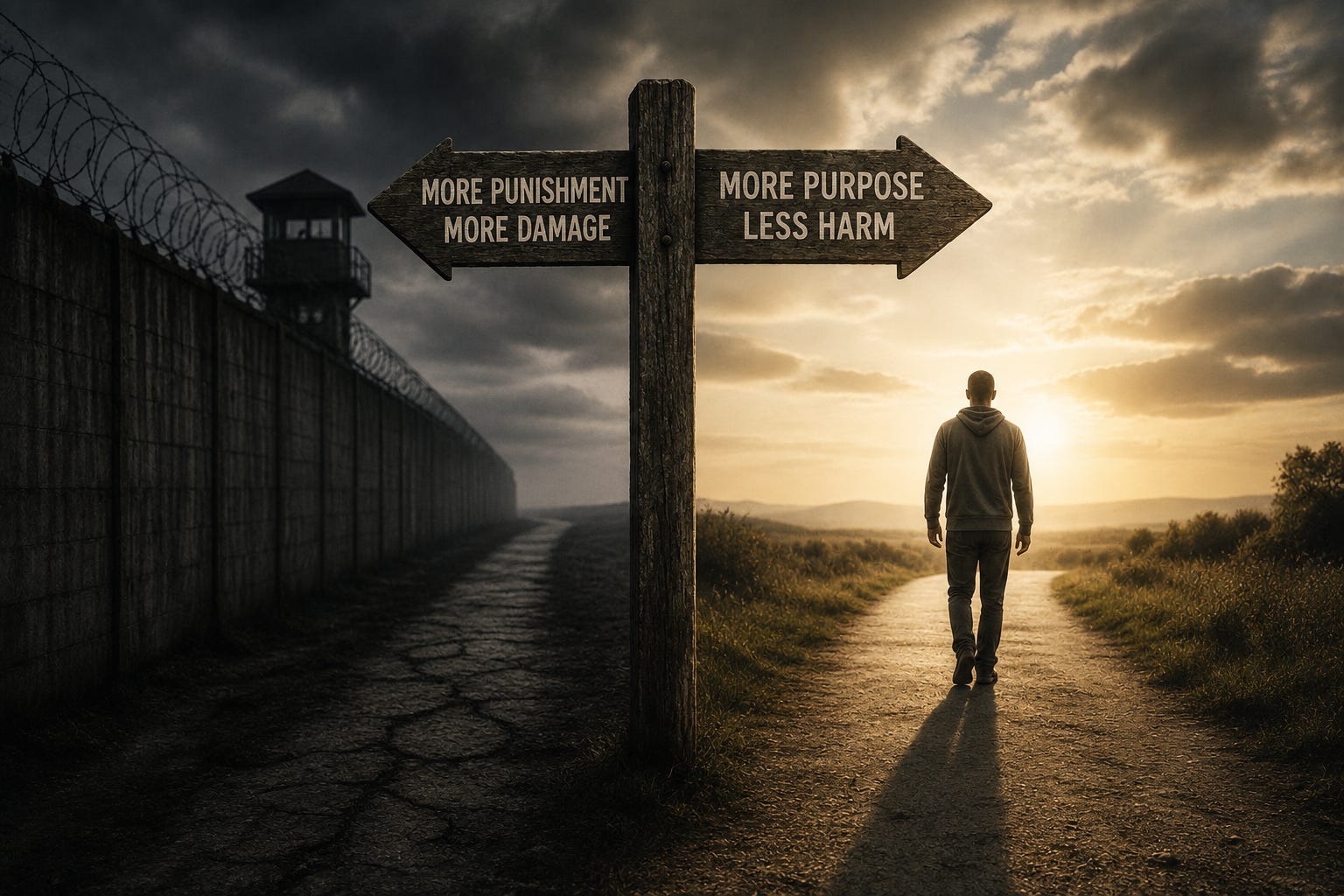
Do we want someone to emerge more damaged than when they entered? More traumatised. More institutionalised. More isolated. More convinced they have no place in society except the margins.
Or do we want them to leave less likely to hurt another human being ever again?
Those aren’t the same outcome. One satisfies our anger. The other serves our future.
And right now, too many of our systems confuse the two.
The question isn’t whether consequences matter. They do. The question is whether consequences alone are enough to create the safer society we all want.
Say Hello to the Bad Guy

There’s a reason Tony Montana’s most famous line has outlived the film itself.
“Say hello to the bad guy.”
It has become part of popular culture because every society understands the role of the bad guy. Stories need villains. Politics needs villains. Headlines need villains. Villains make the world feel simple. They reassure us that evil belongs somewhere else. Somewhere over there. Inside them. Not inside us.
Tony Montana wasn’t just talking about himself. He was talking about the role society had assigned him.
Psychologists call this othering. The process of turning another human being into something fundamentally different from ourselves. Not someone who made terrible choices. Something else. A monster.
And once someone becomes a monster, curiosity disappears. Compassion disappears. Context disappears. The story ends.
The easiest way to believe in monsters is to forget they were once children.
Not because childhood excuses what someone becomes. It doesn’t. Not because understanding removes responsibility. It doesn’t.
But because nobody enters the world as a murderer, a fraudster, or an addict.
People become. Through choices. Through circumstances. Through experiences. Through a thousand moments, some chosen and some imposed upon them.
We talk about monsters as though they’re a different species.
They’re not.
They are human beings who have done monstrous things.
And that distinction matters.
Monsters don’t rehabilitate.
People do.
The Lucifer Effect
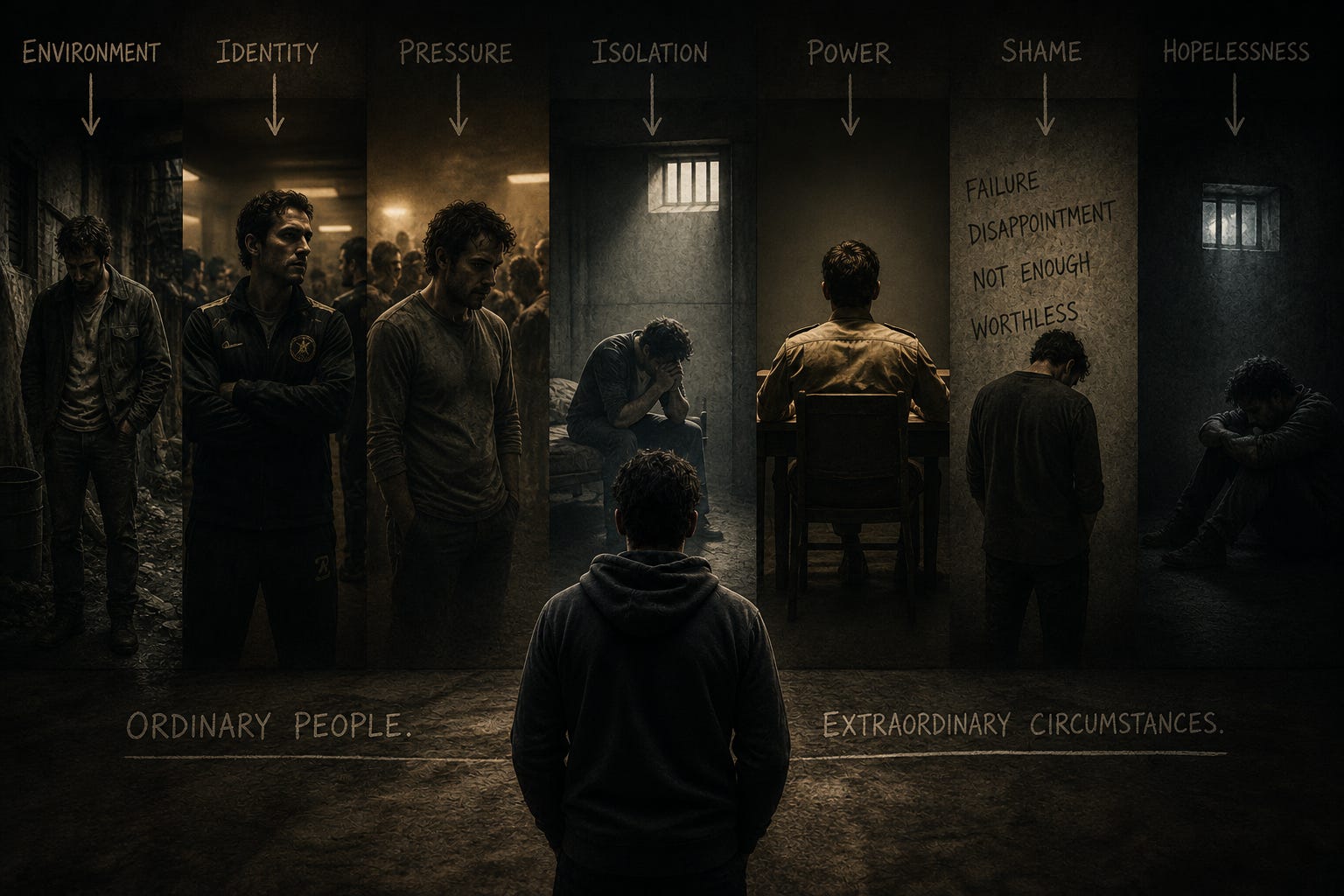
By the time I came across Philip Zimbardo’s work on what he called The Lucifer Effect, I’d already seen its central idea play out countless times inside prisons and immigration detention.
His research didn’t tell me something I didn’t already know. It gave language to what I’d been witnessing.
Zimbardo spent decades asking a question most of us would rather avoid. How do ordinary people come to do extraordinary harm? Not monsters. Ordinary people. People with families. People who laugh. People who love. People who, under different circumstances, might have lived entirely different lives.
His conclusion unsettled a lot of people. Because it challenged something we desperately want to believe. That evil belongs to other people. That the line between good people and bad people is obvious. That we’d recognise it if we saw it.
Zimbardo found something more uncomfortable.
The capacity for harmful behaviour isn’t confined to a particular type of person.
It is part of the human condition.
Whether that capacity emerges depends on far more than character alone. Environment. Identity. Pressure. Isolation. Power. Shame. Hopelessness.
The situation matters. Far more than we’d like to admit.
That’s uncomfortable. Because if circumstances shape behaviour more than we realise, then the distance between “people like them” and “people like us” is much smaller than we’d like to believe.
History has been teaching us that lesson for centuries.
Psychology simply gave it a name.
The Epiphany
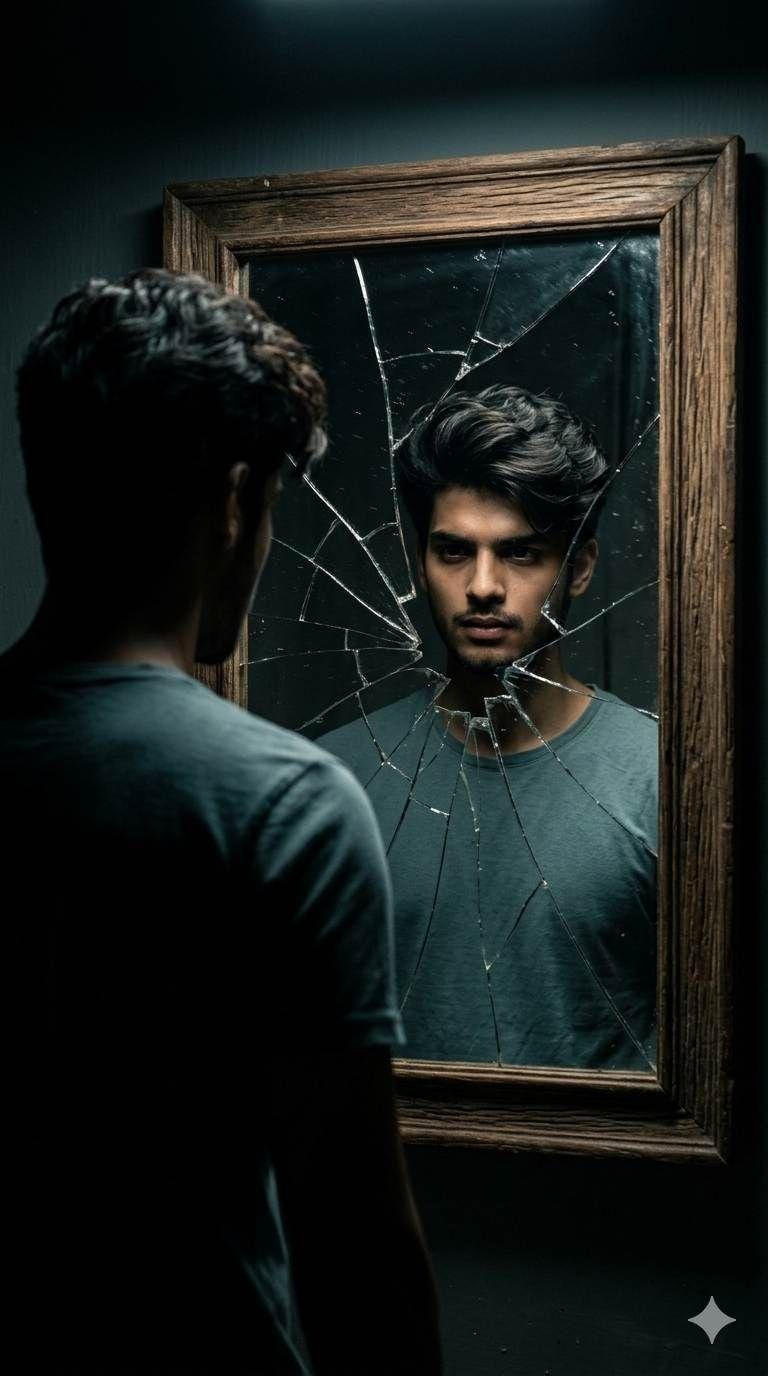
This is where Acceptance and Commitment Therapy (ACT) changed something for me.
Not because it excused what people had done. Because it challenged the story they believed about who they were.
It asks a question punishment alone never asks.
Not: what did you do?
Not even: why did you do it?
But: who do you want to become? And what are you willing to do, today, to become that person?
I’ve watched men sit silently after hearing, perhaps for the first time in their lives, that they are not the same thing as the darkest chapter of their lives.
Nothing dramatic happens. No tears. No sudden breakthrough. Just silence. Then something shifts. Almost imperceptibly. The weight they’ve carried for years begins, however slightly, to loosen.
One of ACT’s central ideas is called cognitive defusion. It teaches people to notice the stories they’ve fused with.
I am a criminal. I am worthless. I’ve ruined everything.
Those thoughts feel like facts. ACT teaches people to hold them differently. Not to deny them. Not to excuse them. Simply to recognise that a thought is not the same thing as an identity. That the mind is capable of telling stories... and not all stories deserve to become a life sentence.
You can acknowledge a story without living inside it forever.
Cognitive Behavioural Therapy arrives at a similar destination from another direction. It asks people to pause. To examine the thought before it becomes the feeling, before it becomes the behaviour.
Is this thought true? What’s the evidence? Would you say this to someone you love?
Most of the men I’ve met inside have never been asked those questions. But when they answer them, the response is remarkably consistent.
“I’d tell them they’re being too hard on themselves.”
“I’d tell them one mistake doesn’t define an entire life.”
“I’d tell them they still have something worth living for.”
The quiet miracle isn’t that they forgive themselves. It’s that, for the first time, they begin to believe they might be more than the label they’ve been carrying.
Not absolution. Not forgetting. Not avoiding responsibility.
Simply recognising that accountability and humanity were never meant to be opposites.
I sat across from a man in his seventies whose favourite moment each week was a phone call from his grandson. A little boy giving his grandad the full match report from his weekend football game. Every pass. Every tackle. Every goal. Every refereeing decision that was, according to him, completely wrong.
I grew up reading headlines about men like him.
Those headlines told me everything I needed to know. They told me he was dangerous. They told me he was different. They told me his inner world would be nothing like mine.
They were wrong.
Not about what he did.
About who he is.
That distinction… between what a person did and who a person is — is the most important thing I’ve learned inside these walls.
Because a person can be responsible for terrible harm and still be human. Those two truths can exist together. We don’t have to choose between accountability and compassion. Between justice and humanity. Between consequences and the possibility of change.
The medieval crowd gathered in the town square. The modern crowd gathers in comment sections. The technology changed. The impulse didn’t.
We still search for villains. We still reduce people to their worst moments. We still convince ourselves that the line separating “people like them” from “people like us” is wider than it really is.
The headline is usually accurate.
It’s just almost never complete.
Somewhere between the headline and the human being is a story nobody bothered to read. The story of what came before. The story of what happened along the way. The story of the person they were before the world decided who they were.
Somewhere today, another headline is being written.
Another photograph.
Another name.
Another crowd deciding they already know the whole story.
Perhaps they do.
Perhaps they don’t.
But before we confuse the worst thing a person has done with everything they are...
it’s worth remembering something.
Nobody is born the headline.
And perhaps the most important question we can ask is not only:
What did this person do?
But: who could they become?
That is the question that changes things. That is the question that makes rehabilitation possible. That is the question that allows people to become more than the worst chapter of their lives.
Because freedom isn’t only found when the prison gates open.
Sometimes it begins the moment a person realises they are more than the worst thing they have ever done.
Stay Unshackled, My Friends.
Stephen
There's a saying — hate the crime, not the person. Once you start hating the person instead, I suppose it becomes easy to dismiss someone entirely: this is someone it's fine to hit, because they committed a crime. Though, putting myself in that position, this is something I can say because I haven't been harmed by anything. If I were the one who suffered some harm, I don't know whether I could hold the same view. I think I'd probably end up hating their humanity itself. Even people inside prison have someone they hold dear, and someone who holds them dear. Suppose there were a person who devoted nine-tenths of their life to doing good — does a single mistake make it acceptable to negate the whole of them?