
Bly Nellie!
10 Days In A Mad House!

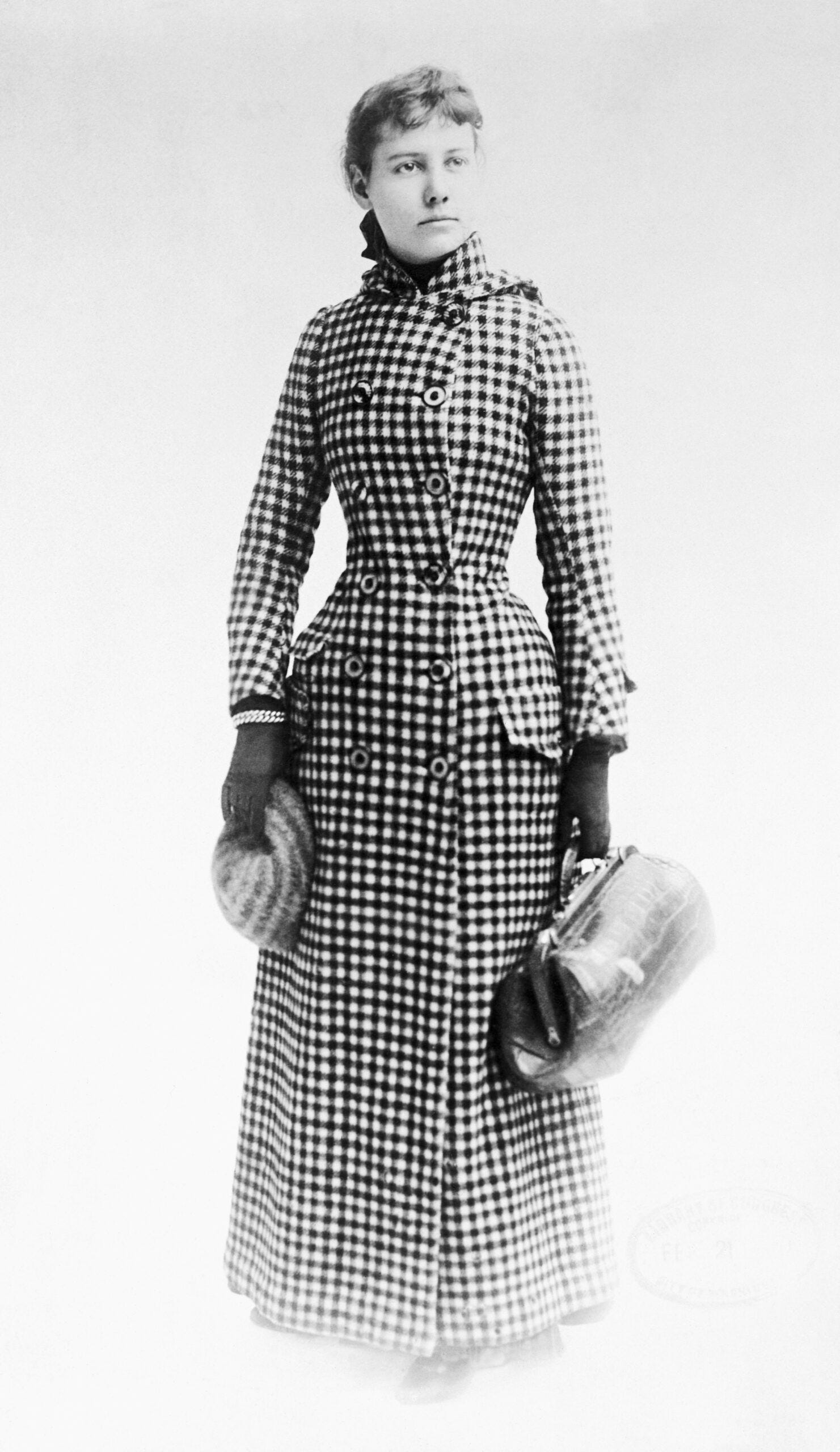
My girlfriend sent me a meme ages ago about a woman who voluntarily checked herself into an asylum over a hundred years ago just so she could write about it from the inside. It intrigued me why somebody would do such a thing.
Then it stuck. One of those throwaway things that quietly asks for more attention. So I took a mental note to read up on her later.
Later came.
Her name was Nellie Bly, and what she did in 1887 was extraordinary. At a time when women were rarely taken seriously in journalism, she convinced a newspaper editor to let her go undercover by pretending to be mentally unwell.
Within days, doctors declared her insane with alarming ease, and she was committed to the Women’s Lunatic Asylum on Blackwell’s Island in New York.
That part alone is unsettling.
How quickly a label can be applied. How little evidence is required when authority goes unchallenged.
Nellie spent ten days inside. What she documented wasn’t just overt cruelty, though there was plenty of that.
Ice-cold baths. Rotten food. Long hours of enforced silence. What disturbed her most was the psychological erosion.
Women ignored when they spoke calmly, then dismissed as hysterical when they raised their voices. Sane people slowly unraveling because no one believed them.
The asylum didn’t just house suffering. It produced it.
When I had the first night in prison in 2020, I arrived too late to be evaluated by a psychologist so was put in the block for people in need of “24/7 supervision”. The guys in this block went to the yard for “social time” separately. One by one They were screamed at and slid their food like animals I got the all clear the next morning once I was evaluated but I recall thinking “if you went in there sane, you’d come out of there crazy”.
That was in the 2020’s in Australia. I shudder to think of how bad something like that would be like in the 1800’s in the US.
When Nellie was released, she wrote Ten Days in a Mad-House. The public outcry was immediate. Funding increased. Reforms followed. Her work changed lives.
She didn’t escape and move on quietly. She made the invisible visible.
That’s why her story belongs in Unshackled.
Because Nellie Bly wasn’t free in the physical sense. She was locked in, monitored, controlled. But she protected something crucial. Her inner clarity. She observed rather than absorbed. She didn’t internalise the narrative imposed on her. She knew who she was before she went in, and she held onto that knowing even as others tried to overwrite it.
That’s unshackled thinking in its purest form.
Most of us won’t find ourselves inside an asylum. But many of us will find ourselves inside systems. Workplaces that reward silence. Relationships where your needs are reframed as flaws. Bureaucracies that reduce your humanity to a case number. Social expectations that tell you to be grateful instead of honest.
The lesson from Nellie Bly isn’t about bravery in the dramatic sense. It’s about discernment. About refusing to confuse authority with truth. About understanding that just because a system calls itself normal doesn’t mean it’s healthy.
There’s also a quieter lesson in how she moved through it. She didn’t rage constantly. She didn’t lose herself trying to convince people who had already stopped listening. She gathered evidence. She stayed mentally organised. She waited for the right moment to speak.
That matters in everyday life.
Being unshackled doesn’t mean fighting every battle loudly. Sometimes it means keeping your inner compass steady while you learn the terrain. It means noticing when you’re being slowly shaped into someone more convenient than authentic. It means asking yourself a simple but powerful question: am I adapting to grow, or adapting to survive.
Nellie Bly shows us that environments can make people sick without ever laying a hand on them. She also shows us that clarity is a form of resistance.
You don’t have to be the hero of the story to learn from one. I’m not here to draw parallels that don’t belong. I’m here because her story is a reminder. That mental freedom is something you actively protect. That labels should always be questioned. That your inner world deserves sovereignty, even when your outer world feels constrained.
If you’d like to learn more about Nellie, take a look at this video:
Over the coming weeks, I’ll be sharing more stories like Nellie’s. Real people, real moments, and what they can teach us about staying unshackled in ordinary, modern life.
Not inspiration for the sake of it. Practical wisdom drawn from those who kept their heads when it would have been easier not to.
If each week my readers can use this platform to learn from others and apply it to their lives, then I’m using it to best of my ability … and that is what I intend to do.
Stay Unshackled, My Friends
Stephen
Love how this reframes Bly's story from just courage to something more subtle and aplicable. The distinction between adapting to grow vs adapting to survive hits hard, especialy in corporate environments where 'being a team player' slowly erodes authenticity. I went thru something similar in my last job where questioning processes got reframed as negativity. Holding onto that inner compass when everyone else is gaslighting you into compliance is exhausting but necessary.
Brilliant Stephen 👏🏽❤️